The First Day Was Also the Last
Every October, Paris asks the art world the same question: who is this week really for? This year, Art Basel Paris answered it with unusual honesty. In the first two days of private previews, galleries reported more than $147 million in sales. Then the fair closed two days early, and the public got a single day.
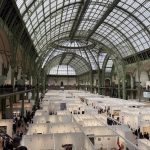
I walked the Grand Palais as someone who works between artists, collectors and interior designers, and I left with three conclusions. The most talked-about painting of the fair was more than a century old. The safest bet was a name everyone already knows. And the people who missed out were the very people art is ultimately made for.
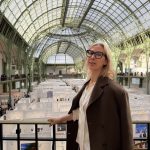
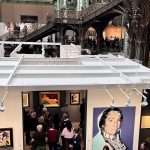
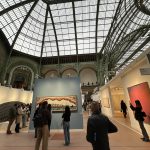
One day for the public
An Art Basel week is built like a staircase. On Tuesday, 20 October, came Avant Première, an invitation-only opening for each gallery’s most important clients. Wednesday and Thursday were VIP preview days for collectors, curators, advisors and press. Tickets are not sold for these days, and this is where most significant business is done.
The public can buy tickets for Friday, Saturday and Sunday; a day ticket this year cost €47. On Thursday, 22 October, at around 3:30 pm, the organisers announced that the fair would close at 7 pm on Friday and stay shut all weekend. The reason was social media calls to gather outside the Grand Palais on Saturday, amid nationwide protests in France. The Louvre, the Musée d’Orsay and the Musée Picasso also closed that Saturday.
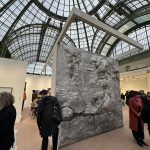
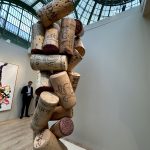
When I checked on Thursday, Friday tickets were no longer on sale. Only those who had booked in advance could get in, and according to press reports visitors were asked to show ID at the door. On Friday there was a queue outside: everyone wanted to catch the first and, as it turned out, the last public day.
The decision is easy to understand. The safety of people and artworks comes first. But the outcome is a paradox. Dealers and collectors had done their business before the doors closed. The ones who lost out were those who come simply to look: people who work during the week and save their weekends for art. In 2026, Art Basel Paris was a fair for professionals far more than for the public.
A $100 million Modigliani and the flight to proven names
The star of the fair was not a contemporary work at all. Pace Di Donna Schrader brought Amedeo Modigliani’s Nu étendu (Lolotte) (1917), offered at more than $100 million. For scale: a year earlier, at the same fair, Pace placed another Modigliani for just under $10 million.
The painting had not sold by the time the fair closed, and that should surprise no one. Deals at this level rarely close within a fair week. The pool of buyers is tiny, and provenance and condition are examined at length. For a picture like this, a fair is a showcase: it sets a price in public and puts the whole market on notice.
The Modigliani captured the mood of the year. This is a contemporary art fair, yet the tone was set by twentieth-century masters: Richter, Baselitz, Fontana, Dubuffet, Joan Mitchell, Lichtenstein, Twombly. They were brought by the galleries that shape the top of the market, Gagosian, Hauser & Wirth, David Zwirner, Pace and White Cube, and those galleries reported the largest sales of the week.
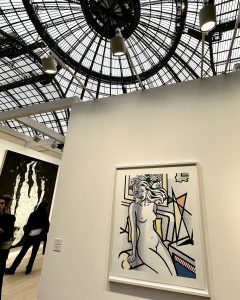
Roy Lichtenstein
«Graphic art featuring a nude figure»
Art Basel Paris 2026
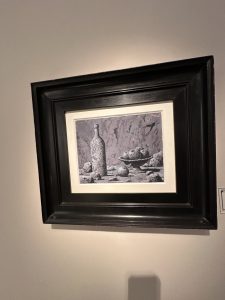
René Magritte
«Memory of a Journey, 1959»
Courtesy Landau Fine Art
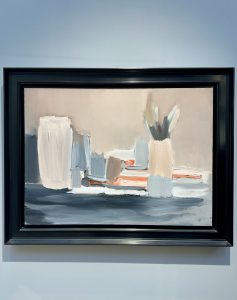
Nicolas de Staël
«Pots et pinceaux, Antibes, 1955»
Courtesy Acquavella Galleries
Why? My reading is that galleries are not ready to take risks right now. An Art Basel booth is a major investment that has to pay for itself. Established names sell more reliably, and a strong work at a sensible price will always find a buyer. The top of the market runs on its own logic: supply is scarce, the seller sets the terms, and blue-chip names remain the most dependable store of value.
The contemporary segment is a harder sell. Prices for young artists, which soared in the early 2020s, have come down sharply since, and the gallery business feels it. In June 2026, Pace, one of the world’s largest galleries, cut around 50 staff and parted ways with around 50 artists. Several respected galleries in London and Brussels closed over the same period, with dealers pointing to rising rents and shipping costs.
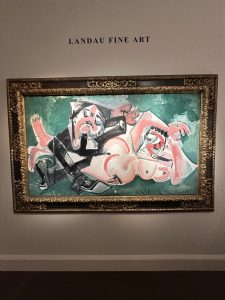
Pablo Picasso
«A couple on the grass»
Courtesy Landau Fine Art
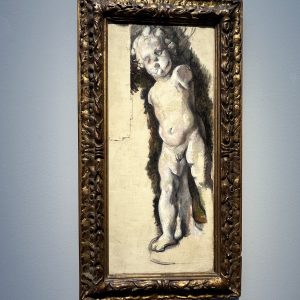
Paul Cézanne
«L'Amour en plâtre, 1894–95»
Courtesy Acquavella Galleries
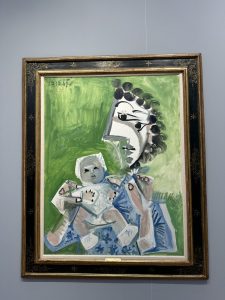
Pablo Picasso
«Mère et enfant, 1965»
Courtesy Acquavella Galleries
Trends I saw on the floor
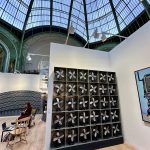
The return of the classics. The big booths were dominated by work from the 1950s to the 1970s: Richter, Fontana, Dubuffet, de Chirico. There were noticeably fewer experiments than proven names.
Art quoting art. A banana duct-taped over an image of Velázquez’s portrait of Pope Innocent X was a perfect example. Old masters reframed with irony turned up all over the fair.
Pop is back. Warhol’s Of Value Watches, Lichtenstein’s Ben-Day dots, bold graphics and an advertising aesthetic.
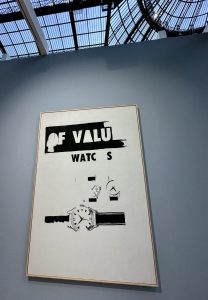
Andy Warhol
«Watch»
Art Basel Paris 2026
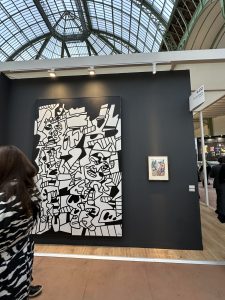
Jean Dubuffet
«Courtesy Van de Weghe, New York»
1974
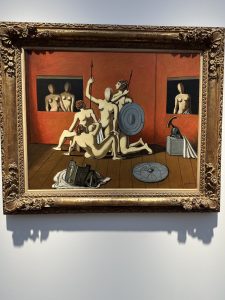
Giorgio de Chirico
«Scuola di Amazzoni, 1967»
Courtesy Cardi Gallery
Black and white. Dubuffet, Warhol, crisp high-contrast lines. Working closely with interior designers, I would call this one of the most interior-friendly trends of the season.
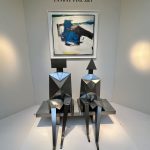
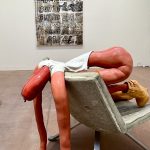
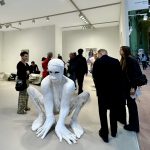
Figurative sculpture with a sense of humour. Crowned busts, glazed ceramic bodies slumped over concrete chairs, life-size anime figures. Sculpture is getting bolder, brighter and more ironic.



What sold
Over the first two preview days, galleries reported more than 300 works sold for around $147 million, according to figures compiled by the fair. Private sales are disclosed at each gallery’s discretion, so the real total is likely higher.
The biggest confirmed deals went through the mega-galleries. Hauser & Wirth sold two works from 1965 for around $10 million each: Gerhard Richter’s Rokokotisch (Rococo Table) and Georg Baselitz’s Der Hirte (The Shepherd). David Zwirner placed another Richter painting for $8.5 million. White Cube sold two works by Julie Mehretu, from 2001 and 2018, at $7.85 million each. Rounding out the top five, Pace sold Jean Dubuffet’s La chaise (1964) for more than $5 million.
Three of those works date from the 1960s. Richter and Baselitz are both living artists, yet buyers went for their classic pieces from six decades ago. The most recent work in the top five is Mehretu’s 2018 painting, and she has long been among the most expensive living artists. Among living artists selling new work, George Condo stood out: three of his 2026 paintings sold for between $2.2 million and $2.95 million.
The takeaway is that the market is choosing certainty. In four years, Paris has become one of the key stops on the global art calendar. Whether it keeps that place after a week when the public got a single day is something next October will tell.
All photos: Ekaterina Borodai / ArtMost, Art Basel Paris 2026.
Catalogue:
-


Maltsev Aleksandr
Crypt
180 x 160 cm

No Ratings Yet
 Loading...10 650 €
-

Salihov Rustam
Immensity of the world №4
100 x 100 cm

average: 1.00
Loading...6 150 € -

Stahl Natalia
Usain Bolt
50 x 75 cm
No Ratings Yet
Loading...500 € -

Unknown Artist
Fisherfolk
67 x 86 cm
No Ratings Yet
Loading...6 850 € -

Konovalov Yuriy
Yemen. center Sana’a
40 x 60 cm
No Ratings Yet
Loading...1 500 € -

Vetrogonsky Andrey
Smoked fish
43 x 51 cm
average: 1.00
Loading...2 400 € -

Konovalov Yuriy
Iran mountains
43 x 61 cm
average: 1.00
Loading...850 € -

Boris Kogan
Park
70 x 50 cm
average: 4.00
Loading...1 050 €


